Mussel Filters
A mussel filter, also known as a biofilter or a mussel sock, is an innovative and environmentally friendly technology used for water filtration and remediation. It harnesses the natural filtering capabilities of mussels to improve water quality in aquatic environments.
Purpose: The primary purpose of a mussel filter is to improve water quality by removing pollutants and particulate matter from aquatic environments. It serves both ecological and practical purposes, such as enhancing biodiversity, restoring habitats, and maintaining clean water for various uses.
Functioning:
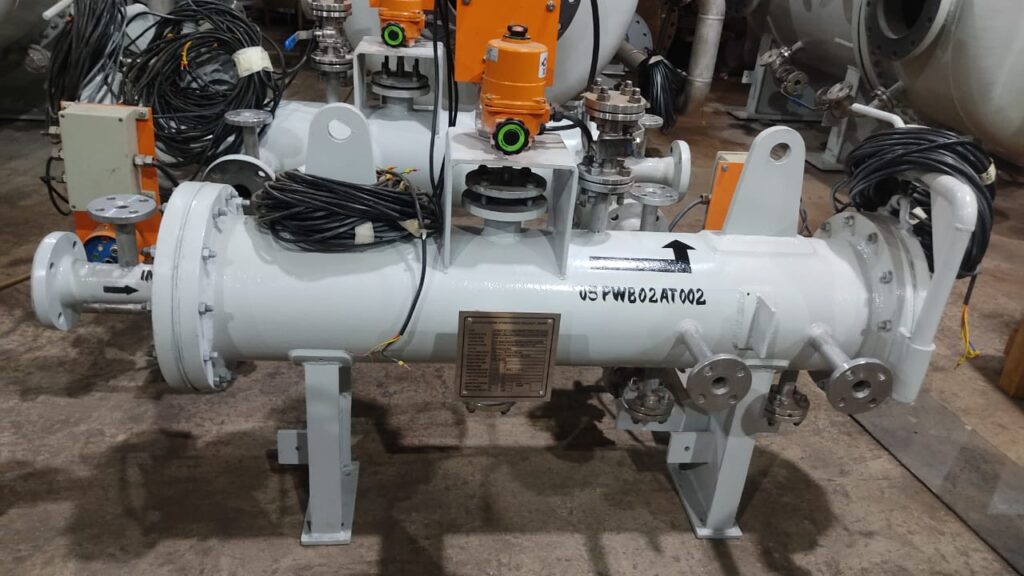
- The liquid enters the inlet section of the filter and is filtered through the basket prior to leaving through the main outlet.
- The filter comprises a cylindrical filter basket inside the filter body. The filter basket is divided into an inlet section and a debris collector after the flow diverter valve. At the end of the filter body there is a debris collection chamber with a flushing outlet.
- The flow diverter and flushing valves are operated by electrical actuators. The operation of the actuators for automatic or manual flushing action is provided by timing or by manual selection. The flushing sequence can optionally be controlled by a differential pressure system.
- The internal filter basket can be serviced or replaced without disconnecting the filter body from system pipe work.
- The filter incorporates an automatic flushing system for removing collected debris without disrupting the main liquid flow.
- Filtration size depends on the selected basket or relocating mussel colonies as needed.
Benefits and Applications:
- Mussel filters offer several benefits and find diverse applications in environmental remediation and water quality management.
- Water Quality Improvement: They effectively reduce suspended solids, nutrients, and pollutants, thereby improving water clarity and quality.
- Biodiversity Enhancement: Mussels are important for aquatic ecosystems, providing habitat and food for other organisms, thereby promoting biodiversity.
- Wastewater Treatment: They can be integrated into wastewater treatment systems to enhance the removal of contaminants before discharge into natural water bodies.
- Aquaculture: Used in aquaculture facilities to maintain water quality and reduce nutrient buildup, which can affect fish and shellfish health.
- Ecosystem Restoration: Deployed in restoration projects to rehabilitate polluted or degraded aquatic habitats, such as rivers, lakes, and estuaries.
Considerations:
While mussel filters offer significant environmental benefits, there are considerations to take into account:
- Regulatory Compliance: Ensure compliance with local regulations and permits when deploying mussel filters, especially in regulated water bodies.
- Monitoring and Maintenance: Regular monitoring of water quality and mussel health is crucial to ensure effective filtration and prevent any adverse impacts.
- Effectiveness: Effectiveness can vary based on factors such as water flow rates, pollutant concentrations, and species of mussels used. Research and site-specific assessments are important for optimal deployment.
Conclusion:
Mussel filters represent a sustainable and eco-friendly approach to water filtration and remediation, harnessing the natural filtering capabilities of mussels to improve water quality. With proper design, deployment, and maintenance, they contribute to ecosystem health, biodiversity conservation, and sustainable water management practices. As technologies evolve, mussel filters continue to offer innovative solutions for addressing water pollution challenges globally.